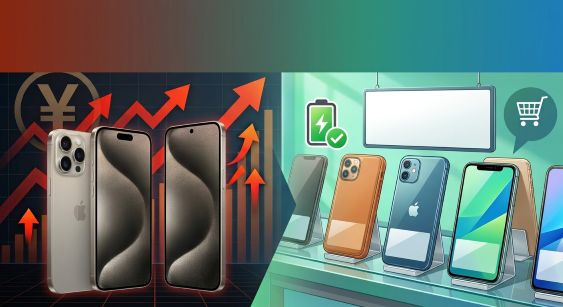
Smartphones have become an indispensable part of our daily lives.
However, in recent years, smartphone prices have skyrocketed. The
latest flagship models (such as the iPhone Pro) now cost over 200,000 yen, and even standard models routinely approach 100,000 to 150,000 yen, leading to a sharp increase in the number of people hesitating to upgrade.
According to the Cabinet Office’s Survey on Consumer Trends, the average lifespan of a smartphone is 4.6 years, which appears to be more than a year longer than it was in 2008.
In other words, this indicates that a situation where “people cannot easily replace their devices due to rising prices” is becoming widespread nationwide.
In this article, I’d like to take a structural look at the reasons behind the rising prices of smartphones and explain specific strategies for purchasing and using devices wisely while keeping costs down as much as possible.
- Two Structural Reasons Why Smartphone Prices Have Skyrocketed This Much
- Relationship with the Local Economy: Trends in Semiconductor Factories in Hiroshima and Higashi-Hiroshima
- The Background Behind the Increasing Number of People Who Continue to Use the Same Smartphone for Long Periods of Time
- The Current State of the “Used Smartphone Market,” Where Demand Is Growing Rapidly
- 3 Tips for Selling Your Smartphone for the Highest Possible Price
- The Best Time to Buy a Used Smartphone at a Bargain Price
- A Roundup of “Smart Choices” for Surviving the Era of Skyrocketing Smartphone Prices
Two Structural Reasons Why Smartphone Prices Have Skyrocketed This Much
The rising prices of smartphones are not simply the result of companies setting high prices; they stem from a complex interplay of global economic trends and technological developments.
There are two main reasons for this.
- ① Rising Import Costs Due to the Weakening Yen:
Many major smartphones (particularly the iPhone) are manufactured and priced overseas.
For example, even if prices remain unchanged in the U.S., the impact of exchange rates (a weak yen) is directly reflected in prices for the Japanese market.
The reality is that as the yen weakens, import and procurement costs skyrocket, forcing manufacturers to pass those costs on to domestic device prices. - ② Rising
Semiconductor Memory Prices Due to Surging Demand for AI: With the rapid adoption of generative AI technology, demand for high-performance processing chips and high-capacity memory is exploding worldwide. The cost of the various components used in
smartphones has risen, which is a major factor driving up the price of the devices themselves.
Relationship with the Local Economy: Trends in Semiconductor Factories in Hiroshima and Higashi-Hiroshima
The growing demand for semiconductors and the strengthening of the supply chain are closely linked to the economies of regional cities.
For example, in Higashi-Hiroshima City, Hiroshima Prefecture, a subsidiary of Micron, a major U.S. semiconductor company, is moving forward with the construction and investment in a new factory.
The expansion of these domestic hubs for cutting-edge semiconductor production is driven by the global trend toward more advanced smartphones and the rapid surge in demand for AI applications.
The Background Behind the Increasing Number of People Who Continue to Use the Same Smartphone for Long Periods of Time
In street interviews and various surveys, it is common to hear people say they have been using the same smartphone for four to eight years.
The following factors explain why long-term use is on the rise.
- The cost of the latest smartphone models—whether paid in a lump sum or in installments—places a significant burden on household budgets.
- If you replace the battery, you can continue using it without any problems and extend its lifespan.
- As device performance (specs) has reached a mature stage, even older models are more than sufficient for everyday use.
There is definitely a growing number of users who take the approach of “using something until it breaks and stops working.”
The Current State of the “Used Smartphone Market,” Where Demand Is Growing Rapidly
With the soaring prices of new devices, the used smartphone market is gaining prominence. Specialized
used smartphone retailers (such as Iosys) carry a wide range of products—from unused, latest-model devices to affordable models from several generations ago, as well as “junk” units—and iPhones in good condition that can be purchased for around 30,000 yen are proving particularly popular.
Trends in Secondhand Smartphone Sales
- Fiscal Year 2020: Approximately 1.85 million units
- Fiscal Year 2026 (Forecast): Approximately 3.96 million units (expected to triple in about 10 years)
In addition to personal use, the purchase of used devices as “business devices” by corporations seeking to reduce costs is also strongly driving market growth.
3 Tips for Selling Your Smartphone for the Highest Possible Price
When selling your old device to help pay for a new one, here are three tips for getting a higher appraisal value:
- ① Sell
it as soon as possible once you no longer need it. The market value of older smartphone models drops every time a new model is released. The golden rule for getting a high buyback price is to
“sell it right away once you stop using it.” - ② Cracked
screens and scratches or dents on the exterior—which can be prevented by using a case or screen protector on a daily basis—are major factors that can lower the appraisal value. Be sure to use a protective case and screen protector
regularly to keep your device in pristine condition. - ③ Submit
the item for appraisal with the original box and all genuine accessories (cables, etc.). If the original box and all accessories included at the time of purchase are present, you are more likely to receive the full appraisal value. If any items are
missing, the appraisal value may be reduced by several percent or more.
The Best Time to Buy a Used Smartphone at a Bargain Price
If you want to get a used device in good condition for the lowest possible price, it’s best to time your purchase for the “peak season for trade-ins and buybacks,” when a large number of devices flood the market.
- Immediately after the release of the new iPhone (September–October)
, a large number of models from one or two generations ago in excellent condition flood the used market as consumers upgrade to the new model, which tends to drive down used market prices. - During the "new life" season (March–April)
, demand for new items rises as people prepare for college or start new jobs, so this is the time when secondhand retailers launch one sale and promotion after another.
A Roundup of “Smart Choices” for Surviving the Era of Skyrocketing Smartphone Prices
Since the upward trend in device prices is linked to global economic factors and component costs, it is unlikely that prices will drop sharply in the future.
That is precisely why it is important for consumers to make smart choices.
- Don't limit yourself to brand-new items; consider "used or discontinued items in good condition."
- Extend the life of your current device with a “battery replacement” costing anywhere from a few thousand yen to 10,000 yen
- Compare not only devices sold by major carriers but also a wide range of “SIM-free devices”
- Concentrate sales and purchases in “September” or “March through April”
Expand your options to suit your usage habits and budget, and enjoy a smart, waste-free smartphone lifestyle.