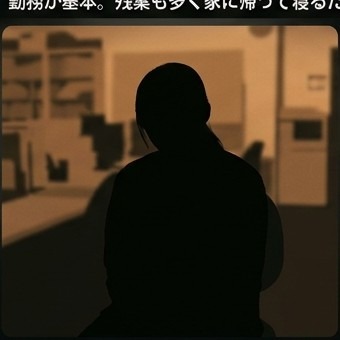
“My life has become nothing but work and sleep,” “I have absolutely no time to myself,” “I feel like I’m going to break down because I don’t have enough time”—such heart-wrenching voices are on the rise in modern Japan.
A look at actual testimonials reveals the harsh reality: “I’m just working to get by” and “The lack of time is slowly eating away at my spirit.”
In this article, we have systematically summarized the reasons behind “time shortages,” the realities across different occupations, the negative effects on physical and mental health, and specific measures to address the current situation, accompanied by firsthand accounts from those directly affected.
- Three Reasons Why the Number of People Who “Just Work and Sleep” Is on the Rise
- By Job Type: Real-Life Reviews of Jobs Where It’s Easy to End Up in a “Work and Nothing Else” Lifestyle
- Three Serious Consequences of Time Constraints (From Those Affected)
- 5 Ways to Break Free from a “Work and Sleep” Lifestyle
- Summary: Time poverty is “the new poverty of modern society.”
Three Reasons Why the Number of People Who “Just Work and Sleep” Is on the Rise
① Long working hours have become the norm
. Online reviews highlight examples where harsh working conditions have become the norm,
such as “45 hours of overtime per month is the minimum standard,” “It’s normal to leave work at 11 p.m.,” “Working on days off has become routine,” and “Working an entire month without a single day off.” Particularly in the service, retail, construction, and manufacturing sectors, the workload per employee continues to increase as labor shortages worsen.
② “Unnamed Household Chores” and the Excessive Burden of Childcare In households where parents shoulder childcare and household chores in
addition to full-time work, many say, “I only have 1 to 2 hours of time to myself each day.”
In households with multiple children, families have lost all sense of leisure in their daily lives—they can’t even find time to cook and are getting by day to day on discounted side dishes.
③ Chronic sleep deprivation
. While many people cut back on sleep to free up time for themselves, concerns have been raised in online reviews that “sleep deprivation increases the risk of future cognitive decline and disease,” making this a condition that poses a very high health risk.
By Job Type: Real-Life Reviews of Jobs Where It’s Easy to End Up in a “Work and Nothing Else” Lifestyle
① National Civil Servant
“I joined the company when I was 18, but every day is just a cycle of waking up, working, and going to sleep. There’s absolutely no joy in it. When I think this is going to go on for another 40 years, I feel nothing but despair.”
② Food Service Industry (large chains, etc.)
“During the year-end and New Year’s holidays, we couldn’t find any part-time workers, so we had to handle everything with just our full-time staff. I didn’t go home for 23 days in a row, and when I worked nonstop for two whole days, I almost lost my mind.”
③ Childcare Teacher
“I can’t take my eyes off the kids while I’m at work, so I have to take all my paperwork home with me. I spend my entire lunch break writing communication notes, and when I get home, I just collapse and sleep.”
④ Retail (Store Manager)
“The standard work hours are from 1:00 p.m. to 11:00 p.m. Unpaid overtime is a given, and the atmosphere makes it difficult to even request overtime. By the time I get home, it’s already the middle of the night, so I have no concept of a personal life.”
⑤ Construction Industry (General Contractors)
“Just like every month, my overtime exceeds 100 hours. Because I’m constantly being transferred to different parts of the country, my children’s school life has never been stable, and I can hardly remember the last time I had dinner with my family.”
⑥ Manufacturing and Semiconductor Plants
“A 12-hour shift schedule with four days on and two days off. Because the day and night cycles are so drastically reversed, even on days off, all I can do is rest my body—I’ve seen several coworkers quit because it took a toll on their health.”
⑦ High-income sales positions
“‘Work three times harder than others and earn three times as much’—that’s our company culture. Regular working hours on weekdays end at 9:30 p.m., and after that, we handle administrative tasks. The pay is definitely high, but I don’t have the time or energy to spend it.”
⑧ Balancing a Full-Time Job, a Side Hustle, and Parenting
“To make ends meet, he worked his main job starting at 7 a.m. and his side job at night until midnight. As a result of pushing himself beyond his limits, he suddenly collapsed one day and was taken away by ambulance.”
Three Serious Consequences of Time Constraints (From Those Affected)
1. Mental Breakdown
: This refers to a situation where one reaches their mental limit because they do not have time for self-improvement or hobbies.
“I’m starting to wonder what I’m living for. Even on my days off, anxiety about ‘tomorrow’s work’ crosses my mind, and I can’t relax because of my guilt. Tears just flow for no reason.”
2. Deterioration of Family Relationships
: Due to differing daily routines, there is a risk that relationships with loved ones could reach the brink of collapse.
“Days spent leaving for work before my child wakes up and returning home after they’ve fallen asleep. Even on my rare days off, I’m too exhausted to move, and I can’t attend family events. I don’t want to sacrifice my family just to get ahead in my career.”
3. Deterioration of Health
: Chronic sleep deprivation and accumulated fatigue can seriously impair physical health.
“My autonomic nervous system went out of whack because I cut back on sleep to make time for myself. I can’t seem to shake a cold, and I’m always working with a foggy head.”
5 Ways to Break Free from a “Work and Sleep” Lifestyle
① Try visualizing (organizing) how you use your time. Write down everything you do throughout the day—work
, housework, childcare, commuting, side jobs, and so on—on a piece of paper.
By looking back objectively, you may discover tasks that you can actually stop doing.
② It’s also important to adopt time-saving appliances (such as dishwashers, robot vacuums, and clothes dryers) that
automate or outsource household chores, or to utilize online grocery shopping, prepared meals, and housekeeping services—adopting a mindset of “buying time with money.”
③ When
reevaluating the work environment itself, if the root cause of the time crunch lies in “structural issues within the company,” there are limits to what can be achieved through individual effort alone.
The most effective solution is to consider transferring to another department or changing jobs.
④ Reevaluate Overly Demanding Side Hustles: While it’s great to boost your income through
side hustles, pushing yourself so hard that it compromises your health or interferes with your main job defeats the purpose.
Find a sustainable pace that works for you.
⑤ Make sleep your top priority in your schedule
. Cutting back on sleep to free up time is the riskiest choice. To maintain your
mental well-being and health, make sure to get the “necessary amount of sleep” first, and then plan out your day.
Summary: Time poverty is “the new poverty of modern society.”
Doesn’t the statement in the review—“It is not just poverty in the sense of lacking money, but also the lack of time that stands in the way of a fulfilling life”—accurately capture the essence of modern society?
We live in an era where “abundance of time” and work-life balance are valued more highly than the amount of income.
When long working hours and excessive stress pile up, anyone is at risk of falling into a “life of nothing but work and sleep.”
First, let’s take a moment to reflect on our daily lives and take the first step toward reclaiming our personal time through convenient services and improvements to our work environment.