- Conclusion: Japan’s talent development has reached its limits
- The Reality of an Era Where New Employee Training Has Become a “Risk”
- Shifting Values Among Young People and the Spread of “Development Cancellation”
- The Struggles of Mid-Level and Middle Managers Reaching Their Limits
- Some companies are finally giving up on hiring new graduates
- Why Has Talent Development in Japan Collapsed? (6 Factors)
- The Ice Age Generation Speaks Out: “Who Brought Japan to This Point?”
- A Prescription for Preventing the Collapse of Talent Development
- Summary: The root of the problem lies not in individual awareness but in “structure”
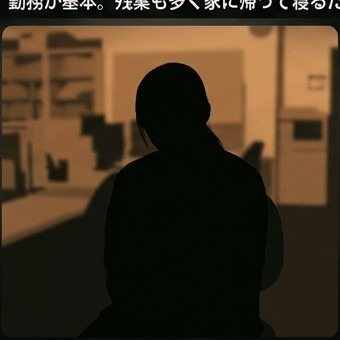
Conclusion: Japan’s talent development has reached its limits
In Japanese workplaces, a vicious cycle—in which “new hires aren’t developing,” “mid-career employees are leaving,” and “managers are becoming burned out”—is becoming increasingly serious.
At the center of this issue, in particular, is the “Ice Age Generation”—a group that has survived a severe job market crisis. As a result of these individuals, who have weathered such
harsh conditions, being tasked with training today’s young workforce, there has been a sharp increase in cries of despair from the front lines, with many saying, “I no longer have the energy to teach.”
In this article, based on real-life testimonials from the “Ice Age Generation” gathered directly from the workplace, we’ll take an in-depth look at questions such as “Why has Japan become a country where people don’t grow?” and “What is the true nature of ‘training fatigue’ in the workplace?”
The Reality of an Era Where New Employee Training Has Become a “Risk”
The culture of “leading by example” and “strict guidance,” which was once taken for granted, has collapsed. In
today’s workplace, training is beginning to be viewed more as a “risk” than as an investment.
Increased Risk of Harassment
Fearing that even the slightest misstep in guidance could lead to complaints or resignations, supervisors are becoming hesitant to provide guidance.
Voices from the Field
“If I say something, it’s harassment; if I ignore it, I’m accused of abandoning them. What am I supposed to do?”
A system where education doesn’t make life any easier for you
It is increasingly common to see cases where training new employees only increases the workload, without resulting in any improvement in one’s own performance evaluation or salary.
Voices from the Field
“Training a new hire doesn’t mean my workload will go down. The extra burden actually outweighs any benefits.”
Shifting Values Among Young People and the Spread of “Development Cancellation”
As symbolized by the term “development cancellation”—which refers to giving up on developing talent early on due to a divergence in values—the generational divide continues to widen.
A Gap in Values and Friction
Communication has broken down between younger employees, who prioritize work-life balance, and the older generation, who have always taken hardships for granted.
Voices from the Field
“They complain about every little thing. I’m tired of it, so I’m canceling the training.”
Motivation Collapse Due to the “Salary Reversal” Phenomenon
There have been cases where the salaries of new graduates—whose pay was raised to stay competitive in the hiring market—are higher than those of mid-level employees who have contributed to the company for many years, leading to an outburst of discontent.
Voices from the Field
“Here I am, with 20 years of work experience and a take-home pay of 200,000 yen, compared to a 23-year-old new graduate making 220,000 yen. I have absolutely no desire to teach anymore.”
The Struggles of Mid-Level and Middle Managers Reaching Their Limits
The “Ice Age Generation” and mid-level employees—who should be the backbone of the organization—are being worn down by the pressure from both above and below.
Excessive stress from being caught in the middle
Juggling both pressure from upper management and the responsibility of mentoring younger employees, the weight of responsibility alone bears heavily on me.
Voices from the Field
“We’re pressured from above, forced to clean up the mess from below, and burdened with nothing but responsibility. The pay just doesn’t match the work.”
Inefficiency Caused by Resource Waste
Instead of developing employees with growth potential, our time is consumed by patching up problems and providing only the bare minimum of support.
Voices from the Field
“We’re spending too much of our resources filling in for underperforming team members, leaving us no time to think about future work.”
Some companies are finally giving up on hiring new graduates
Some companies have determined that the costs and risks of training employees from scratch are not worth it and are moving to withdraw from hiring recent graduates altogether.
Increasing Burden on Basic Education
The reality is that we have to start by teaching them the manners and attitudes expected of working professionals, and this goes beyond what the workplace can currently handle.
Voices from the Field
“We have to start by teaching them proper behavior and language. We’ve reached the limit of training young employees from scratch.”
Why Has Talent Development in Japan Collapsed? (6 Factors)
Based on feedback from the field, the factors contributing to the collapse can be summarized in the following six points.
- The Rising Risk of Harassment: As the line between
appropriate guidance and harassment becomes blurred, it becomes impossible to provide guidance. - The lack of compensation for education merely increases the burden on
teachers without translating into recognition or additional pay. - A clash of values: the gap between younger employees who prioritize efficiency and
work-life balance and the older generation, who have come of age in an era that emphasized grit and perseverance. - Wage Reversal and a Sense
of Reverse Discrimination: The absurdity of raising only starting salaries while leaving the wages of veteran and mid-level employees unchanged. - I am so overwhelmed with tasks related to
supporting overworked managers that I am unable to focus on my core responsibilities of management and strategic planning. - Recruitment Challenges and Mismatches: It has become increasingly difficult to hire
young talent, and as a result, inexperienced employees are being assigned to frontline positions that lack the resources to train them.
The Ice Age Generation Speaks Out: “Who Brought Japan to This Point?”
For a generation that has endured an environment where “hard work goes unrewarded” for many years, the current situation seems all too cruel.
Voices from the Field
“We went through hell applying to 100 companies. But young people today earn higher salaries. I have absolutely no energy left to teach. Who is to blame for Japan’s failure to develop its workforce?”
As symbolized by this phrase, the loss of motivation in education stems not from a lack of individual enthusiasm, but from structural distortions that have been neglected for many years.
A Prescription for Preventing the Collapse of Talent Development
To overcome this crisis, it is essential to restructure the system itself rather than rely on the efforts of those on the front lines.
- (1) Providing fair compensation and allowances for training; granting an “education allowance” to employees responsible for training
guidance and clarifying evaluation criteria. - ② Establishing clear guidelines that draw a distinct line between “guidance” and “harassment,” and formulating standards that allow
those on the front lines to provide feedback with confidence. - ③ Adjusting
compensation for experienced and mid-level employees: Providing base pay increases for existing employees and making adjustments to ensure balance following the raise in starting salaries. - ④ Creating opportunities for dialogue to bridge the generational gap; introducing onboarding initiatives that promote
mutual understanding.
Summary: The root of the problem lies not in individual awareness but in “structure”
Simply attributing the problem to individual qualities—such as “Young people these days…” or “Veterans today…”—will not solve the problem.
- A System Where Speaking Up Goes Unrewarded
- An environment where being cautious itself becomes a risk
- A Pay Structure That Undervalues Experienced Employees
As a result of these factors combining, we have ended up with a “workplace where no one teaches or can be taught.” To enhance the sustainability of
Japan as a whole, we must immediately shift to a system that listens to the concerns of frontline workers and ensures that those responsible for training are properly recognized.