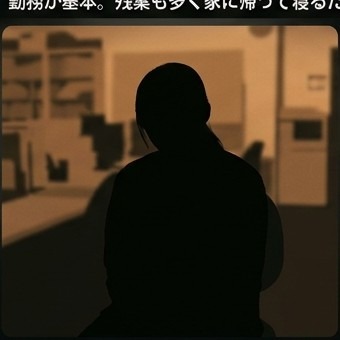
“I’m so busy every day that I only get four hours of sleep.”
“I’ve been making more mistakes at work, and I’ve been getting irritated more easily lately.”
Are you perhaps dismissing chronic sleep deprivation as “just part of life for working adults” and ignoring it?
In today’s society, many working adults are cutting back on sleep due to work, household chores, and the widespread use of smartphones.
However, sleep deprivation is not merely a matter of accumulated fatigue; it is an extremely dangerous condition that leads to impaired brain function, deteriorating mental health, and even increases the risk of life-threatening accidents and illnesses.
In this article, we analyze “real-life testimonials about mistakes and health issues caused by sleep deprivation” submitted by 20 working professionals. We provide a detailed explanation of the dangers and scientific risks associated with
sleep deprivation, as well as specific solutions you can implement starting today to improve your sleep quality.
- [Real Voices] A List of Reviews from 20 Working Adults on Sleep Deprivation
- Unraveling the Truth from User Reviews! 5 Major Risks of Sleep Deprivation for Working Adults
- (1) Significant impairment of cognitive function and judgment (equivalent to being intoxicated)
- ② Mental Instability and Increased Risk of Depression
- ③ Weakened Immune System and Increased Risk of Lifestyle-Related Diseases
- ④ Risk of Accidents or Injuries (Near-Misses)
- ⑤ Adverse Effects on Obesity and Appearance
- Put These into Practice Right Now! 5 Specific Ways to Improve Your Sleep Quality
- Summary: Sleep is not something to “cut back on,” but rather something to “invest in.”
[Real Voices] A List of Reviews from 20 Working Adults on Sleep Deprivation
We’ve compiled real-life experiences and reviews from 20 working adults who struggle with sleep deprivation, organized by category. As you’ll see, the negative effects range widely—from decreased
work performance to physical and mental health issues.
Reviews on Work and Productivity
- [Review 1] Sales professional in their 30s
: “On days when I haven’t gotten enough sleep, I can’t retain any of the information from meetings at all. Even when I look back at my notes, my handwriting is so messy that I can’t even remember what I wrote, and it’s affecting my work.” - [Review 2] 20s, Office Worker
: “Due to overtime every day, my sleep was down to four hours. I lost my concentration and made a series of simple calculation errors—the kind I would never normally make—and was severely reprimanded by my boss.” - [Review 3] Engineer in his 30s
: “On days when I don’t get enough sleep, I tend to overlook bugs in my code, and my work takes more than twice as long as usual. As a result, I end up working overtime, which cuts into my sleep even more—I’m caught in a vicious cycle.” - [Review 4] Manager in his 40s
: “My judgment has become clouded—I almost sent an important email to the wrong client. It gave me a cold sweat to realize that one wrong move could have cost the company its credibility.” - [Review 5] 20s, Planning Position
: “On days when I don’t get enough sleep, I become extremely forgetful. I can’t remember where I put documents or my company cell phone—even though I’m sure I left them on my desk—and I end up wasting energy just looking for them.”
Customer Reviews on Mental and Emotional Control
- [Review 6] 30s, Customer Service
: “When I’m chronically sleep-deprived, I just can’t stop feeling irritable. Even when a junior colleague makes a mistake that I’d normally laugh off, I end up speaking harshly to them, and I feel bad about it afterward.” - [Review 7] 20s, Public Relations Professional
: “On days when I don’t get enough sleep, I become very emotionally unstable. I sometimes get hit by intense anxiety for no reason, or find myself on the verge of tears while at work.” - [Review 8] 30s, civil servant
: “When I’m sleep-deprived, I don’t even have the energy to talk to my coworkers or family. I start to find interacting with people a chore, and when people around me say, ‘You’ve been so cold lately,’ I end up feeling really bad about myself.” - [Review 9] 20s, Sales Representative
: “Every night, I lie awake worrying about work or thinking about the next day’s tasks, and I end up regretting it in the early morning. I don’t get any time to rest, either mentally or physically.” - [Review 10] Professional in their 40s
: “During a period when I was sleep-deprived for several months, nothing brought me joy anymore, and life seemed gray. I think my mental state had completely broken down.”
Customer Reviews Regarding Physical Ailments and Health Issues
- [Review 11] Designer in her 20s
: “When I don’t get enough sleep, my skin breaks out all at once. Every time I look in the mirror, my motivation drops, my makeup doesn’t go on right, and I get really down.” - [Review 12] 30s, works at a manufacturing company
: “When I don’t get enough sleep for a while, I lose control of my appetite and end up binge-eating high-calorie foods late at night. As a result, I gained more than 5 kilograms over the course of six months.” - [Review 13] 20s, IT professional
: “My immune system has clearly weakened due to lack of sleep. I used to rarely catch a cold, but now I catch one almost every month, and I’ve become more prone to getting sick.” - [Review 14] 30s, healthcare professional
: “Even if I ‘catch up on sleep’ for more than 10 hours on my day off, I still feel heavy and sluggish. In fact, my head feels even heavier, and my day off ends up being a total waste.” - [Review 15] 40s, Sales Representative
: “I’m constantly plagued by chronic headaches and stiff shoulders. I can’t do without painkillers like Loxonin, and I’m basically just getting by at work by masking the pain with medication.” - [Review 16] 20s, Education Sector
: “Due to lack of sleep, I didn’t have the energy to think about a balanced diet, so most of my daily meals ended up being convenience store boxed lunches and cup noodles.”
Customer Reviews Regarding Accidents and Near-Misses
- [Review 17] Driver in his 30s
: “I commute by car, and there was a time when I stopped at a red light and my mind went blank for just a moment before I suddenly snapped back to reality. It terrified me to realize that one wrong move could have led to a life-threatening accident.” - [Review 18] 20s, Manufacturing
: “I’m hit by intense drowsiness on the commuter train, and I’ve fallen asleep—almost as if I’ve lost consciousness for a moment—and missed my stop many times. By the time morning rolls around, my energy is already at its limit.” - [Review 19] Man in his 30s, construction industry
: “When I went to a job site while sleep-deprived, my hands slipped, and there was a close call. Since that could have led to an injury, I’ve come to realize just how important sleep is.” - [Review 20] Sales professional in his 40s
: “I felt so sleepy while walking that I lost my footing and almost slipped on the stairs at the station. I realized that sleep deprivation is just as dangerous as driving under the influence.”
Unraveling the Truth from User Reviews! 5 Major Risks of Sleep Deprivation for Working Adults
As evidenced by user reviews, sleep deprivation is not simply a matter of feeling “sleepy.”
Scientifically speaking, the effects of sleep deprivation on the human body are serious.
(1) Significant impairment of cognitive function and judgment (equivalent to being intoxicated)
Insufficient sleep significantly impairs the function of the frontal lobe (the part of the brain responsible for thinking and judgment).
According to research, the brain’s performance after two weeks of sleeping only six hours per night declines to a level equivalent to that of someone who has pulled an all-nighter or is “slightly intoxicated.”
This can lead to serious workplace issues such as mistakes, forgetfulness, and accidental message sends.
② Mental Instability and Increased Risk of Depression
Sleep is a crucial time for the brain to recover from fatigue and process emotions. A lack of
sleep disrupts the balance of neurotransmitters—such as serotonin and dopamine—that regulate emotions.
This not only makes you more prone to irritability but also leads to increased anxiety and a loss of motivation; in the worst cases, it can trigger mental health issues such as depression and adjustment disorders.
③ Weakened Immune System and Increased Risk of Lifestyle-Related Diseases
During sleep, the body secretes “growth hormone,” which helps repair the body and maintain immune function.
Lack of sleep weakens the function of immune cells, making you more susceptible to colds and infections.
Furthermore, numerous medical studies have proven that lack of sleep dramatically increases the risk of lifestyle-related diseases such as high blood pressure, diabetes, and dyslipidemia.
④ Risk of Accidents or Injuries (Near-Misses)
Sleep deprivation poses a direct threat to life—whether it leads to dozing off while driving to work or injuries caused by a loss of concentration on the job. When a phenomenon known as “microsleep”—in which the brain shuts down
momentarily—occurs, consciousness is completely lost for a few seconds, which can cause serious accidents.
⑤ Adverse Effects on Obesity and Appearance
When you don’t get enough sleep, levels of the hormone that suppresses appetite (leptin) decrease, while levels of the hormone that stimulates appetite (ghrelin) increase.
This leads to a stronger urge to binge eat at night or crave junk food, causing your body to become more prone to weight gain.
Furthermore, a lack of growth hormone disrupts skin cell turnover, which can result in rough skin and a prematurely aged appearance.
Put These into Practice Right Now! 5 Specific Ways to Improve Your Sleep Quality
Even working adults who say, “I’m too busy to physically get more sleep,” can maximize the recovery benefits by improving the “quality” of their sleep.
Here’s a concrete action plan you can start today.
| Countermeasures | Specific Actions | Expected Benefits |
| 1. Turn off your smartphone before bed | Put your smartphone away 30 minutes to an hour before getting into bed. | Blocks blue light and promotes the secretion of the sleep hormone (melatonin) |
| 2. Limiting Caffeine and Alcohol | No caffeine after 2:00 p.m. / Avoid drinking before bed | Reduces the stimulating effect and prevents waking up in the middle of the night |
| 3. Choosing the Right Time to Bathe | Soak in water at about 38°C 90 minutes before bedtime | You’ll drift smoothly into deep sleep just as your core body temperature drops. |
| 4. Soak up the morning sunlight | Soak up the sunlight on the balcony or by the window as soon as you wake up | Your internal clock (circadian rhythm) resets, helping to regulate your sleepiness at night. |
| 5. Creating an Appropriate Sleeping Environment | Blackout curtains and proper temperature settings (26°C in summer / 18–20°C in winter) | You can maintain deep sleep (non-REM sleep) until morning without waking up in the middle of the night |
In particular, using your smartphone right before bed is your biggest enemy, as it tricks your brain into thinking it’s still daytime. Simply getting into the habit of not keeping your smartphone
by your pillow—and instead charging it somewhere else—can dramatically improve the quality of your sleep.
Summary: Sleep is not something to “cut back on,” but rather something to “invest in.”
What emerged from the testimonials of 20 working professionals was the frightening reality that “if you ignore sleep deprivation, your work, your health, and your relationships will all fall apart.”
The mindset of “I’ll cut back on sleep because I’m busy” ultimately reduces work efficiency, leads to more mistakes, and ends up costing you even more time.
Sleep is neither “laziness” nor a “waste of time.
” It is the most cost-effective investment in yourself to enhance your performance starting tomorrow and to protect your body and mind.
Why not start tonight by putting your phone away 30 minutes earlier than usual and giving your body a good rest?