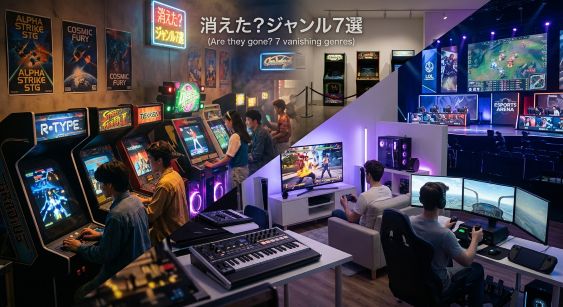
Have you ever been playing a game and been surprised to see a message like that in a place like that?
Hidden elements—
commonly known as “Easter eggs” or “secret messages”—that developers have quietly tucked away in the corners of in-game maps or deep within the program. These go beyond mere whimsy; they are “another story” that reveals the behind-the-scenes realities of the grueling development process, expresses gratitude to players, and even conveys the personal sentiments of the developers themselves.
In this article, we’ll take an in-depth look at eight types of secret messages from developers hidden in popular games! From little-known backstories and behind-the-scenes production details to tips for getting even more out of your gaming experience, we’ve got it all covered.
- What are “hidden messages” (Easter eggs) in video games?
- 🎮 1. Hidden text inscribed with the developers’ “thanks”
- 🎮 2. “Rants and Honest Thoughts” About the Struggles of Bug Fixing
- 🎮 3. “Humorous and Whimsical Elements” That Show Off the Developers’ Playful Side
- 🎮 4. Traces of ideas that were scrapped during production (unimplemented data)
- 🎮 5. “Behind-the-Scenes Stories of Localization” That Differ Between the International and Japanese Versions
- 🎮 6. Cases Where Developers Have Hidden “Self-Deprecating Jokes”
- 🎮 7. A “Challenge” for Players Pushing Their Limits
- 🎮 8. Developers’ “Personal Memories and Tributes”
- Why Do Hidden Messages Captivate People?
- Summary: Hidden messages are the game’s “alternative story”
What are “hidden messages” (Easter eggs) in video games?
In the video game industry, the term “Easter egg” refers to messages, images, or special features that developers intentionally hide within their games.
The term derives from “Easter egg hunting,” the tradition of searching for hidden colorful eggs during Easter.
These elements—which players would typically overlook during normal gameplay and can only be uncovered through specific command inputs or data mining—have become a popular topic that sparks the curiosity of gamers around the world.
Now, let’s take a look at eight typical patterns to see what kinds of secret messages are actually hidden in the game.
🎮 1. Hidden text inscribed with the developers’ “thanks”
The most common type is a message of gratitude from the development team to the players who stuck with the game until the very end.
Not only will their names appear in the credits (end credits), but they will also be displayed as text in hard-to-reach hidden rooms within the game and on bonus screens after completing the game.
- Common locations: typically behind
graphics, at the very end of hidden dungeons, or within code that can only be viewed through reverse engineering - Message Highlights
: Direct, heartfelt phrases such as “Thank you for playing all the way through” and “I appreciate your passion.”
It functions as a “special letter” that only players who have overcome challenging trials can view, greatly amplifying the sense of accomplishment you feel when you find it.
🎮 2. “Rants and Honest Thoughts” About the Struggles of Bug Fixing
In stark contrast to the glitz and glamour of the public eye, the world of game development is a relentless battle against deadlines and bugs.
Sometimes, the hardships and candid thoughts of the development team are secretly hidden within the source code and data.
- "I pulled three all-nighters to fix this bug."
- "I never want to implement this physics engine again."
- "It moves for some reason, but don't touch it—it's dangerous."
These were originally notes left by programmers to communicate with one another during debugging (bug-fixing) sessions, or doodles drawn to relieve stress.
Although they were supposed to be deleted, they were accidentally left behind—and have since become a unique piece of backstory that conveys the “human side” of the developers to players.
🎮 3. “Humorous and Whimsical Elements” That Show Off the Developers’ Playful Side
Another major appeal of the game is its design, which fully showcases the developers’ sense of humor and wit.
- Staff Photos and Caricatures
The faces of the development staff have been secretly incorporated into character textures and murals. - Parody
Elements: The game features parody lines from other famous movies, anime, and video games. - If you read the text of the puns and palindrome
spells—or the descriptions of items—backward, they turn out to be silly puns.
The humor—which contrasts with the serious tone of the game as a whole—brings a smile to players who discover it and becomes a staple topic shared on social media and in online communities.
🎮 4. Traces of ideas that were scrapped during production (unimplemented data)
During the game development process, a vast number of ideas are scrapped due to storage limitations, schedule constraints, or the need to adjust game balance.
However, traces of these ideas are not always completely removed and may remain as hidden data or hidden messages.
- Text
indicating the existence of a deleted stage, such as the comment, “Actually, there used to be a phantom Chapter 5 beyond this point.” - A fragment of the backstory regarding the character’s initial design
: “He was originally designed as the protagonist’s enemy.”
By discovering and analyzing these details, fans can explore “what-if” scenarios—wondering, “What if this feature had been implemented?” They can be considered valuable historical records that help fans gain a deeper understanding of
the work’s world.
🎮 5. “Behind-the-Scenes Stories of Localization” That Differ Between the International and Japanese Versions
Global titles released worldwide undergo a process called “localization,” in which text and expressions are optimized to accommodate differences in language and culture. During
this process, messages that exist only in specific language versions may be included.
| Reason for the Change | Specific Examples | The Role of Hidden Messages |
| Cultural and Religious Background | Replace expressions considered taboo overseas with different jokes | Notes explaining “intentional changes” made by the translation team |
| Translating Memes and Slang | Translating Japan-Specific Internet Memes into International Internet Slang | Local references crafted by localization specialists in each country |
Comparisons like, “This is just a regular line of dialogue in the Japanese version, but in the English version, it’s a hidden joke by the developers,” are one of the topics that really get the overseas gaming community buzzing.
🎮 6. Cases Where Developers Have Hidden “Self-Deprecating Jokes”
There are also messages in which the developers themselves poke fun at their own balancing mistakes and difficulty settings, such as, “I think this mechanic is way too hard, even for me,” or “It’s impossible to get through this part without taking any damage (lol).”
These elements are often incorporated into action games and RPGs known for their high difficulty levels, serving as a way to soothe frustrated players.
It’s strange how learning the behind-the-scenes story—that “even the developers themselves felt hopeless during playtesting at the very points where players were struggling”—makes you feel a sense of kinship with a difficulty level that might otherwise seem unreasonable.
🎮 7. A “Challenge” for Players Pushing Their Limits
Within the game, there are locations that are absolutely impossible to reach through standard procedures, as well as puzzles that require superhuman skill and perseverance. Only the “elite players” who manage to overcome
these challenges may receive a challenge from the developers.
- "I never thought any player would actually make it this far…"
- "You are a true seeker. I honor you for this."
These messages are often more than just text; it’s not uncommon for them to be accompanied by exclusive titles, special trophies, or hidden graphics. This can be seen as the developers’ highest form of respect for
players’ curiosity and passion for the game.
🎮 8. Developers’ “Personal Memories and Tributes”
Finally, I’d like to share the personal and heartfelt sentiments of the developers, which have been preserved through the medium of video games.
- A Message of Gratitude
to My Family: A Message to My Spouse and Children Who Supported Me Throughout the Long Development Process - In
Memory of Our Friends: A memorial for team members who passed away while working on the project and for fans who left us too soon - Incorporate
personal milestones—such as the date your child was born or your wedding anniversary—as numerical elements
These elements go beyond mere entertainment, conveying a strong sense of humanity—the realization that “games, too, are works created by human hands.” They strike a chord with
players and deepen their attachment to the game.
Why Do Hidden Messages Captivate People?
Why are so many gamers drawn to “behind-the-scenes details” and “hidden elements”?
The reasons for this become clear when looking at search trends on the web.
- In the aftermath of
satisfying the desire to “check the answers,” you find yourself wondering, “Are there any details I overlooked?” and “What are other people’s interpretations?” - Shared Value
Within the Community: By discovering and learning about rare hidden elements, fans can share them on social media and in video comment sections, fostering a sense of connection with other fans. - Amplifying Affection for the Work: When
you can see the faces and passion of the creators, the game is elevated to something “truly special.”
Users aren’t just searching for “game walkthroughs”; they’re also looking for the “backstory” that will enrich their gaming experience.
Summary: Hidden messages are the game’s “alternative story”
The secret messages quietly hidden within games are more than just a bit of playful creativity or Easter eggs.
They are filled with the developers’ passion, struggles, hard work, humor, and deep love and respect for the players.
Even in games you play casually every day, if you take a closer look at every corner of the map or venture into places you don’t usually go, you might come across an unexpected “letter.”
Why not try exploring the hidden “other story” while getting a sense of the developer’s perspective?